January 19, 2026
Smart Access for Mixed-Use Properties with Guests, Staff, and Residents
Smart access for mixed-use properties helps hotels and rentals manage guests, staff, and residents in shared buildings. Learn how structured, role-based access reduces manual coordination and operational friction.
JobelHome
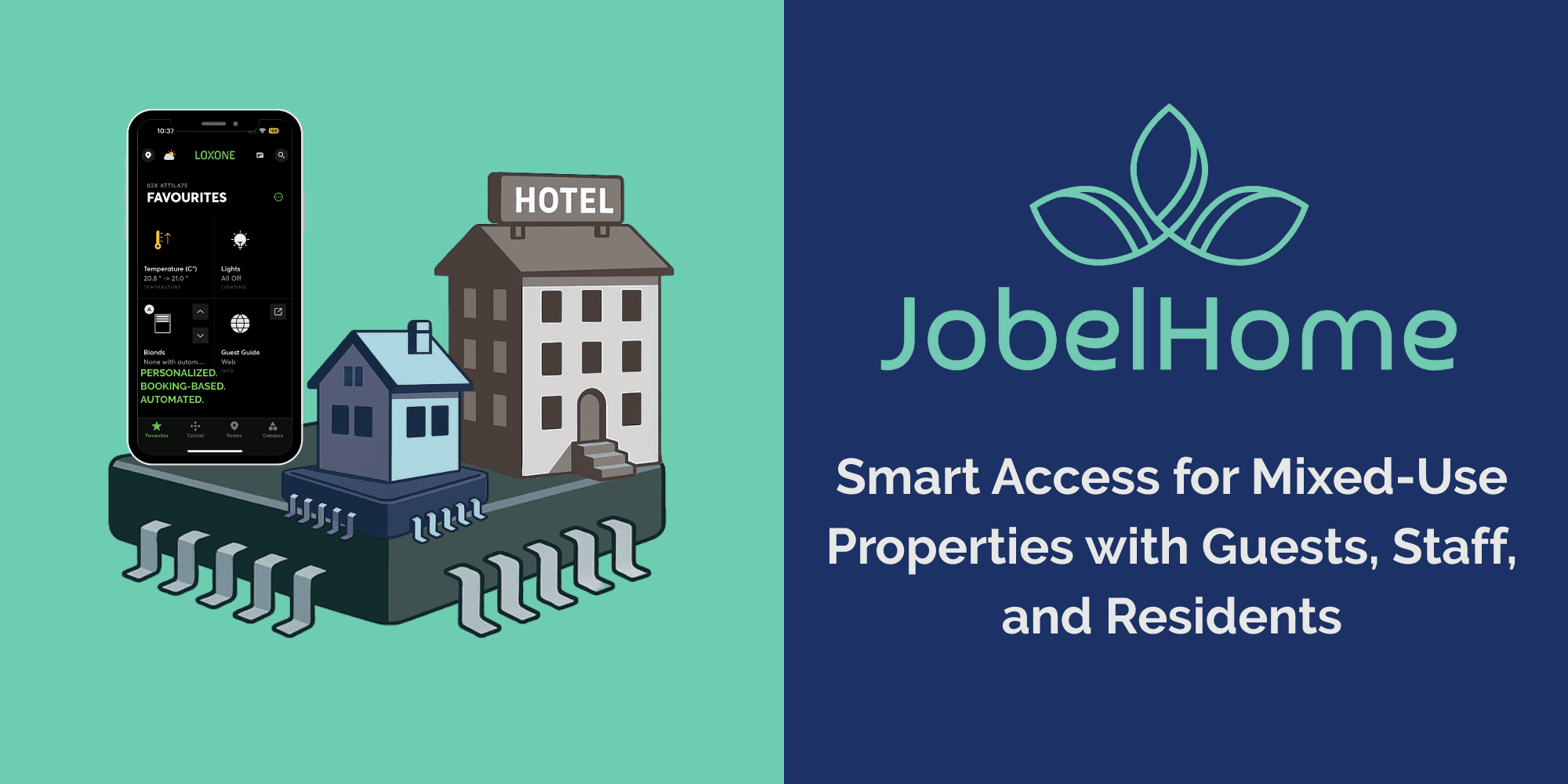
Smart Home Access in Mixed-Use Buildings: Guests, Staff, and Owners
Smart access for mixed-use properties is becoming essential as hotels, serviced apartments, and short-term rentals increasingly operate inside buildings shared with residents, offices, or commercial spaces.
Mixed-use buildings introduce a unique access challenge. Guests, staff, owners, and permanent residents all use the same infrastructure, but with very different access needs. When access is not structured, daily operations become reactive and dependent on manual coordination.
Why access is more complex in mixed-use buildings
Unlike standalone hotels, mixed-use properties rarely control every door.
Common constraints include:
Shared main entrances managed by building owners or associations
Different access rules for residents and guests
Limited ability to change or upgrade building-wide systems
Multiple user groups accessing the same spaces
While apartment doors may be under control, the access journey often starts earlier, at shared entrances or common areas. When this part fails, staff usually step in.
This challenge overlaps with access control in shared apartment buildings:
https://www.jobelhome.com/blog/hybrid-access-in-shared-buildings-with-third-party-entrances
The operational cost of unstructured access
When access rules are unclear or spread across systems, people become the fallback.
Typical issues include:
Guests calling for help at shared entrances
Staff manually coordinating access for arrivals
Temporary access not being revoked on time
Tension between operators and building management
These situations consume time, create uncertainty, and increase operational risk.
Over time, this contributes to fragmented access management costs:
https://www.jobelhome.com/blog/the-operational-cost-of-managing-access-across-multiple-systems
Why one-size-fits-all access does not work
Mixed-use buildings require different access rules for different roles.
Guests need time-bound access linked to bookings.
Staff need role-based access across shifts.
Owners and residents need permanent or semi-permanent access.
Traditional access setups struggle to support this variety. They either rely on shared keys or force manual exceptions.
This is where smart access for mixed-use properties becomes necessary rather than optional.
How smart home access supports multiple user groups
Smart home access introduces a structured, role-based approach.
Instead of treating all users the same, access is managed centrally with clear rules.
With a smart access approach:
Guest access follows booking status and timing
Staff access is role-based and limited to working hours
Owners retain permanent access where required
Access rights are logged and traceable
All of this happens without changing how the building itself is owned or managed.
To see how this works in practice, explore JobelHome’s smart home access system here:
https://www.jobelhome.com/smart-home-access
This approach also helps replace manual key handover in complex building environments:
https://www.jobelhome.com/blog/what-actually-goes-wrong-with-manual-key-handover-in-modern-rentals
Keeping operations calm without disrupting residents
One of the biggest concerns in mixed-use buildings is resident experience.
Smart access helps operators:
Avoid staff presence at shared entrances
Reduce arrival-related noise and confusion
Keep access predictable and quiet
Guests arrive independently, staff access is controlled, and residents are not affected by daily rental operations.
Scaling mixed-use operations without added friction
As portfolios grow, mixed-use buildings become more common, not less.
Each new property introduces:
Different building rules
Different access constraints
Different stakeholder expectations
Smart access allows operators to scale without redesigning access workflows every time.
It also fits naturally alongside hybrid access models used in more complex environments:
https://www.jobelhome.com/hybrid-access-system
Conclusion: structure creates balance in shared buildings
Smart access for mixed-use properties is not about controlling every door. It is about structuring access so that guests, staff, and owners can coexist without friction.
By assigning clear access rules to each user group, properties reduce manual work, protect resident experience, and keep operations predictable.
To understand how this fits into real mixed-use hospitality environments, explore JobelHome’s smart home access system in more detail:
https://www.jobelhome.com/smart-home-access
Who We Are
JobelHome is a hospitality automation platform helping hotels and holiday homes reduce operational effort, energy waste, and guest friction through smart, connected systems.
Website: https://www.jobelhome.com/
Instagram: https://www.instagram.com/jobelhomeplatform/
LinkedIn: https://www.linkedin.com/company/105750936/admin/dashboard/
Email: hello@jobelhome.com