January 15, 2026
Individual NFC Access for Hotel Guests: Why One Card per Booking Is Not Enough
Individual NFC access for hotel guests improves security, flexibility, and operations. Learn why one NFC card per booking creates friction in modern hotels.
JobelHome
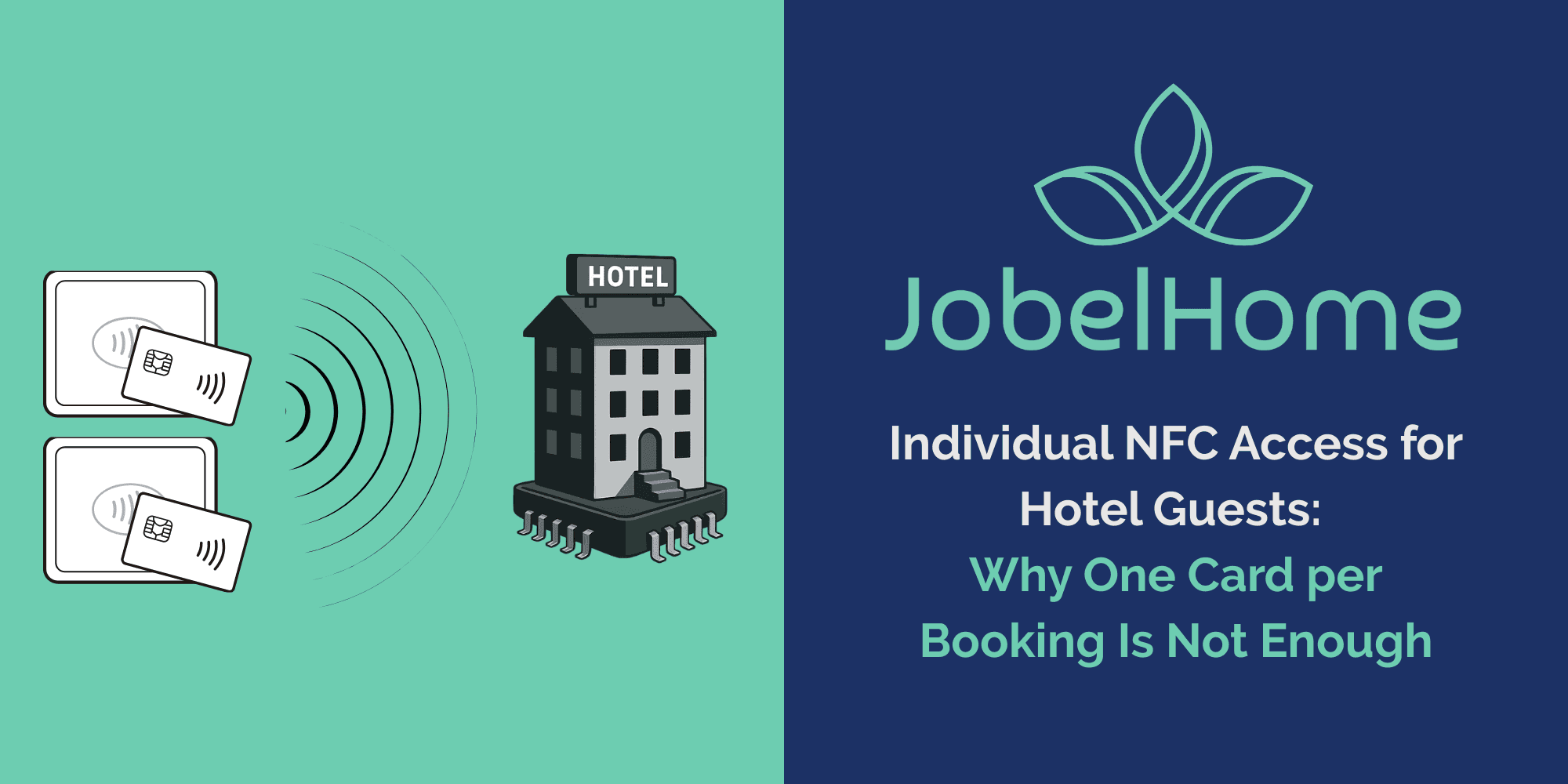
Why One NFC Card per Booking Is Not Enough
Individual NFC access for hotel guests is not a luxury. It is a practical necessity in modern hospitality where flexibility, security, and guest experience all depend on how access is managed — not just issued.
At first glance, issuing a single NFC card per booking seems simple. One card, one room, one guest. But in practice, this approach falls short the moment guest needs become more dynamic: multiple occupants, late additions, shifts in arrival times, staff access coordination, and lost or forgotten cards.
The result? Operational friction, security risk, and unnecessary workload for support teams.
Why one card per booking feels convenient
Many hotels adopt the “one NFC card per booking” approach because it appears to reduce complexity:
One credential per room
Easy to issue at check-in
No dependency on guest devices
For small properties with low operational variation, this can work well enough.
But as soon as conditions change — additional guests, early arrivals, late departures, or shared spaces — this model reveals its limitations.
This relates to broader access management challenges that large and growing hotels face:
https://www.jobelhome.com/blog/keyless-hotel-check-in-guide
What actually breaks with one NFC card per booking
In real operations, “one card” introduces several problems:
Multiple occupants, one credential: Guests traveling together may need access on separate schedules — a single card does not serve that need.
Lost or forgotten cards: Every lost card requires manual deactivation and re-issuance, consuming staff time.
Temporary access needs: Housekeeping, maintenance, or late check-ins may need time-bound access that a single guest card cannot provide.
Shift handovers: When staff rotate across shifts and properties, reliance on one physical card per booking becomes operational friction.
These issues translate into unclear access responsibility and repeated manual intervention.
The hidden security and operational costs
A single NFC card may appear secure, but it masks deeper risks:
Shared credentials: Multiple people using the same card means no clear trace of who accessed a space and when.
Manual resets: Lost card resets often require system access and time — not ideal during peak arrivals.
Uneven control: Staff and external partners may need access without a guest card’s limitations.
Over time, this increases security risk and support workload — an avoidable cost in automated operations.
This is similar to the case where manual access processes break down and create friction in arrival workflows:
https://www.jobelhome.com/blog/problems-with-manual-key-handover-in-modern-rentals-jobelhome
Why individual NFC access works better
Instead of one card per booking, the access model should be:
One credential per person
Time-bound and role-specific
Linked to booking and registration data
Revoked automatically at checkout
This makes access:
Clear who has it
Traceable when used
Flexible for changes during the stay
Scalable across rooms, floors, and properties
This is the logic behind modern NFC guest access solutions, where each user receives their own credential tied to their identity and stay parameters:
https://www.jobelhome.com/blog/nfc-guest-access-hotels-rentals
How smarter NFC access works in practice
Smarter NFC access creates credentials automatically based on booking events and guest registration status. Each guest — and each staff role — gets access that matches their schedule and needs without manual setup.
This results in:
Fewer lost credentials
No shared cards with ambiguous access history
Role-based staff access that does not depend on guest cards
Temporary access for third parties without exposing guest keys
When access is automated and individualised, workflows become predictable and secure.
This also ties naturally into broader automated access and hotel operations workflows:
https://www.jobelhome.com/blog/automated-smart-home-access
Why this matters for guest experience and staff efficiency
When each person has their own NFC credential:
Guests feel secure and empowered
Staff spend less time issuing and resetting cards
Support load decreases
Security auditing becomes clearer
This reduces friction across the arrival, stay, and departure lifecycle — a noticeable benefit in medium and large hotels alike.
Conclusion: one card does not fit all
A single NFC card per booking is an operational simplification that doesn’t hold up in real hospitality contexts.
Individual NFC access for hotel guests:
Provides clarity
Enhances security
Reduces manual work
Scales with property size and complexity
To see how this works in practice, explore NFC guest access solutions that align access with booking and guest identity logic:
https://www.jobelhome.com/nfc-guest-access
Who We Are
JobelHome is a hospitality automation platform helping hotels and holiday homes reduce operational effort, energy waste, and guest friction through smart, connected systems.
Website: https://www.jobelhome.com/
Instagram: https://www.instagram.com/jobelhomeplatform/
LinkedIn: https://www.jobelhome.com/linkedin
Email: hello@jobelhome.com