12. Januar 2026
Early Noise Detection in Short Term Rentals
Early noise detection in short term rentals helps prevent neighbour complaints and police escalations by restoring visibility before noise issues escalate.
JobelHome
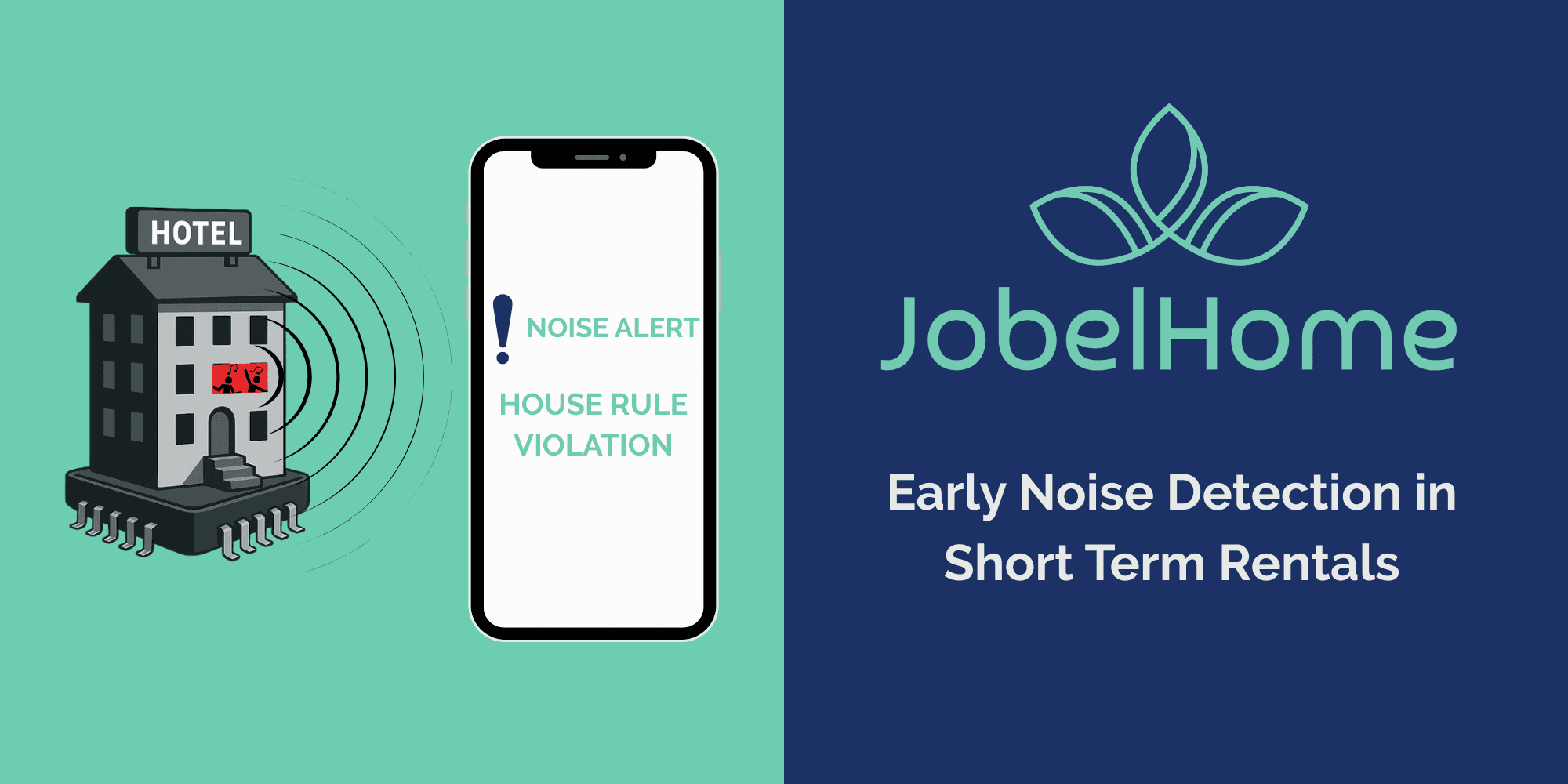
How Early Noise Alerts Prevent Police and Neighbour Escalations
Early noise detection in short term rentals has become a structural requirement in modern hospitality operations. In residential environments, noise issues escalate quickly and often without warning. By the time operators are informed, neighbours or authorities are already involved.
Early noise alerts change this dynamic by restoring visibility before situations turn into formal complaints or police visits.
Why noise escalation happens in short term rentals
Even with clear house rules, short-term stays carry inherent noise risk.
Common factors include:
Guests not fully reading or respecting guidelines
Neighbourhoods with low tolerance for repeated disturbance
Peak arrivals coinciding with social hours
Noise rising gradually without immediate notice
Once noise crosses an acceptable threshold, neighbours rarely wait. Escalation typically follows a predictable path.
The hidden cost of reacting too late
When operators rely on neighbours, staff patrols, or guest feedback, they are already reacting after escalation has started.
The hidden cost includes:
Police visits logged against the property
Community complaints registered with local authorities
Negative reviews following forced guest intervention
Strained neighbour relationships that compound over time
What begins as a single noise incident often becomes a recurring operational risk.
What early noise detection actually provides
Early noise detection in short term rentals restores visibility before escalation.
Instead of waiting for complaints, operators receive:
Real-time monitoring of sound levels
Alerts when predefined thresholds are exceeded
Immediate notifications to hosts or managers
Logged noise events for context and follow-up
This allows operators to intervene calmly and early, before neighbours feel forced to escalate.
This visibility is only effective when it is consistent across all units and stays. A structured noise detection approach allows operators to monitor sound levels continuously, respond early without relying on neighbour complaints, and maintain control over potential disruptions before they escalate into operational issues.
To see how this is implemented in practice:
https://www.jobelhome.com/noise-detection
How early alerts change outcomes for everyone involved
Early noise alerts are not about enforcement. They change outcomes.
For neighbours
Noise issues are addressed before complaints are necessary, preserving long-term community relationships.
For operators
Guest communication remains calm and preventive instead of reactive and confrontational.
For authorities
Police involvement becomes rare because situations are resolved early.
This outcome-focused approach is central to proactive noise detection:
https://www.jobelhome.com/blog/proactive-noise-detection
Real operational scenarios where early detection matters
Early noise detection proves its value in everyday situations:
Late check-ins where gatherings escalate quickly
Weekend noise spikes that rise gradually
Guests unaware of how far sound carries in residential buildings
Instead of responding to complaints, operators respond to signals.
This shift from reaction to prevention is critical in short-term rentals, and a noise monitoring device for short term rentals provides practical insights by turning noise risk into a measurable signal instead of a surprise complaint.
Why manual noise monitoring no longer scales
Manual noise handling depends on perfect timing and human intervention.
In practice, it fails because:
Noise rises outside staff hours
Neighbours escalate before operators are aware
Manual checks do not scale across portfolios
As operations grow, early noise detection becomes essential to maintaining control without increasing staff workload.
This scaling challenge appears across hospitality automation:
https://www.jobelhome.com/blog/scaling-vacation-rental-business
Conclusion: early visibility prevents escalation
Noise issues are not primarily guest behaviour problems. They are visibility problems.
Early noise detection in short term rentals gives operators time to act before complaints, police involvement, or neighbour conflict occurs. By detecting issues early, teams protect guest experience, preserve community trust, and reduce long-term operational risk.
Early detection does not replace hospitality. It protects it.
To understand how this fits into your operations:
https://www.jobelhome.com/noise-detection
Who We Are
JobelHome is a hospitality automation platform helping hotels and holiday homes reduce operational effort, energy waste, and guest friction through smart, connected systems.
Website: https://www.jobelhome.com/
Instagram: https://www.instagram.com/jobelhomeplatform/
LinkedIn: https://www.linkedin.com/company/105750936/admin/dashboard/
Email: hello@jobelhome.com