25. Januar 2026
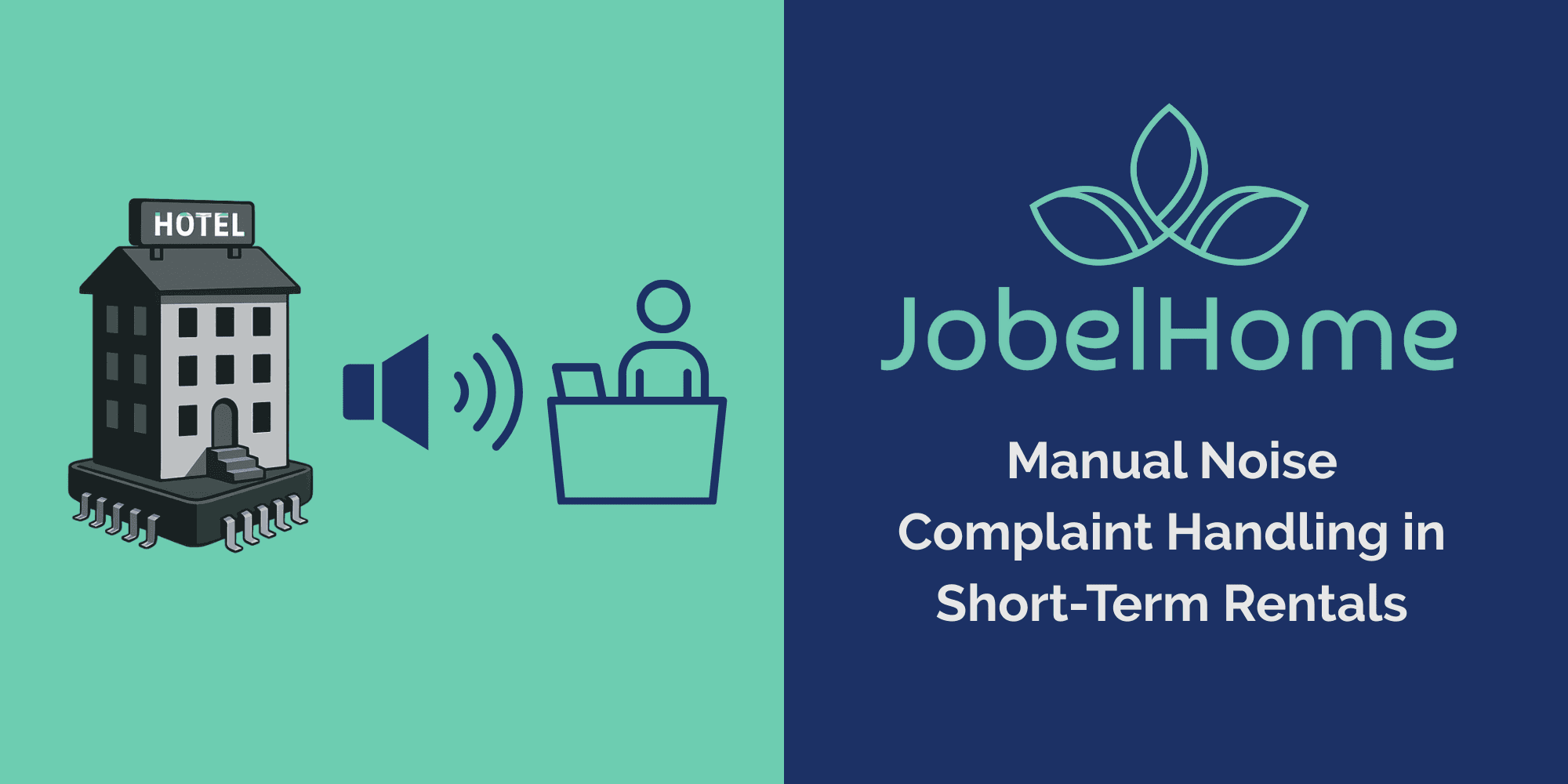
Manual Noise Complaint Handling in Short-Term Rentals
Manual noise complaint handling often leads to escalation in short-term rentals. Learn why complaints arrive too late and how early detection prevents conflict.
JobelHome
Why Manual Noise Complaints Don’t Work in Short-Term Rentals
Manual noise complaint handling is one of the most common reasons noise issues escalate in short-term rentals instead of being resolved quietly. By the time a complaint reaches the operator, the situation has usually already crossed a line with neighbours, authorities, or building management.
In residential environments, reacting to complaints is not early intervention. It is damage control.
The problem with manual noise complaint handling
Manual noise complaint handling depends on someone else noticing the issue first.
In practice, this means:
A neighbour hears noise and becomes frustrated
The neighbour decides whether to complain or call authorities
The operator is informed only after escalation
Guest communication starts under pressure
At that point, the issue is no longer just noise. It is about trust, tolerance, and repeated disturbance.
The hidden cost of waiting for complaints
When operators rely on manual complaints, they lose control over timing.
By the time a complaint arrives:
The disturbance has already lasted too long
Neighbour relationships are damaged
The property may be flagged by building management or authorities
Guest interaction becomes reactive instead of preventive
Over time, these incidents accumulate and affect listing longevity, reviews, and local acceptance.
Why complaint-based noise handling fails operationally
Complaint-based handling assumes:
Neighbours will tolerate occasional disturbance
Guests will respond calmly after being confronted
Operators will be available immediately
Escalation will stop once a complaint is addressed
In reality, complaints often arrive late, emotionally charged, and after tolerance has already been exceeded.
This is why manual handling frequently results in police involvement rather than resolution:
https://www.jobelhome.com/blog/noise-monitoring-device-for-short-term-rentals
How proactive noise detection changes the dynamic
Replacing manual noise complaint handling with early detection restores visibility.
Instead of waiting for escalation, operators receive:
Alerts when noise levels rise above acceptable thresholds
Time to act before neighbours are affected
Context to communicate calmly with guests
A way to resolve issues quietly
This shift from reaction to prevention fundamentally changes outcomes.
To see how this works in practice, explore JobelHome’s noise detection approach:
https://www.jobelhome.com/noise-detection
Why early signals matter more than complaints
Complaints signal that tolerance is already exhausted.
Early noise alerts signal that intervention is still possible.
This difference determines whether:
Guests receive a polite reminder or a forced warning
Neighbours remain cooperative or become hostile
Authorities are involved or never contacted
This principle is central to proactive noise management:
https://www.jobelhome.com/blog/proactive-noise-detection
Scaling short-term rentals without scaling conflict
Manual noise complaint handling does not scale.
As portfolios grow:
Complaints increase linearly
Staff availability becomes inconsistent
Neighbour tolerance decreases
Early noise detection applies the same logic across:
Multiple apartments
Different buildings
Entire portfolios
This enables consistent handling without increasing staff workload.
The same scalability challenge appears across hospitality operations:
https://www.jobelhome.com/blog/scaling-vacation-rental-business
Conclusion: complaints are too late
Manual noise complaint handling is not noise management. It is escalation management.
By the time a complaint arrives, the opportunity for calm resolution is often gone. Manual noise complaint handling keeps operators reactive, increases neighbour friction, and raises the likelihood of police involvement.
Early detection restores control by giving operators visibility before escalation begins.
To understand how proactive noise handling fits into modern short-term rental operations, explore JobelHome’s noise detection system:
https://www.jobelhome.com/noise-detection
Who We Are
JobelHome is a hospitality automation platform helping hotels and holiday homes reduce operational effort, energy waste, and guest friction through smart, connected systems.
Website: https://www.jobelhome.com/
Instagram: https://www.instagram.com/jobelhomeplatform/
LinkedIn: https://www.linkedin.com/company/105750936/admin/dashboard/
Email: hello@jobelhome.com