13. Januar 2026
Early Detection of Guest Issues in Hospitality
Early detection of guest issues helps prevent complaints by spotting operational signals before frustration builds, protecting reviews and reducing support workload.
JobelHome
Why Guest Complaints Usually Start Long Before the Guest Speaks Up
Early detection of guest issues is one of the most overlooked aspects of hospitality operations. Most complaints are not sudden reactions. They build up quietly over time, often long before a guest decides to speak up, leave a review, or contact support.
By the time a guest raises a complaint, the underlying issue has usually already caused frustration. The problem is not that guests complain too much. It is that operators often only see the issue at the very end of the escalation chain.
Understanding how complaints form is the first step toward preventing them.
Guest complaints rarely start with words
Guests do not usually complain the moment something goes wrong.
Instead, issues often begin as small inconveniences:
The apartment feels too cold or too warm
Wi-Fi disconnects briefly
Access takes longer than expected
A device does not respond immediately
Individually, these moments seem minor. From the guest’s perspective, they are often tolerated at first. But tolerance has a limit.
When small issues repeat or remain unresolved, frustration accumulates quietly. By the time the guest reaches out, the issue has already crossed that threshold.
This is why reactive guest support almost always feels rushed.
The hidden cost of waiting for complaints
When operators wait for guests to report problems, they give up control of the situation.
At that point:
The guest is already annoyed
Communication becomes emotionally charged
Resolution feels like damage control rather than service
Reviews and ratings are already at risk
Waiting also creates operational inefficiency. Support teams spend more time de-escalating situations instead of preventing them.
This pattern mirrors other reactive processes in hospitality, where problems are addressed only after escalation:
https://www.jobelhome.com/blog/automated-support-alerts
Why guests hesitate to speak up early
Guests often delay communication for several reasons:
They do not want to bother staff
They assume the issue will resolve itself
They do not know whom to contact
They are unsure whether the issue is “worth mentioning”
Especially in short-term rentals and contactless setups, guests may not feel comfortable reaching out immediately. Silence does not mean satisfaction. It often means hesitation.
This gap between issue occurrence and guest feedback is where most complaints are born.
Early detection of guest issues changes the dynamic
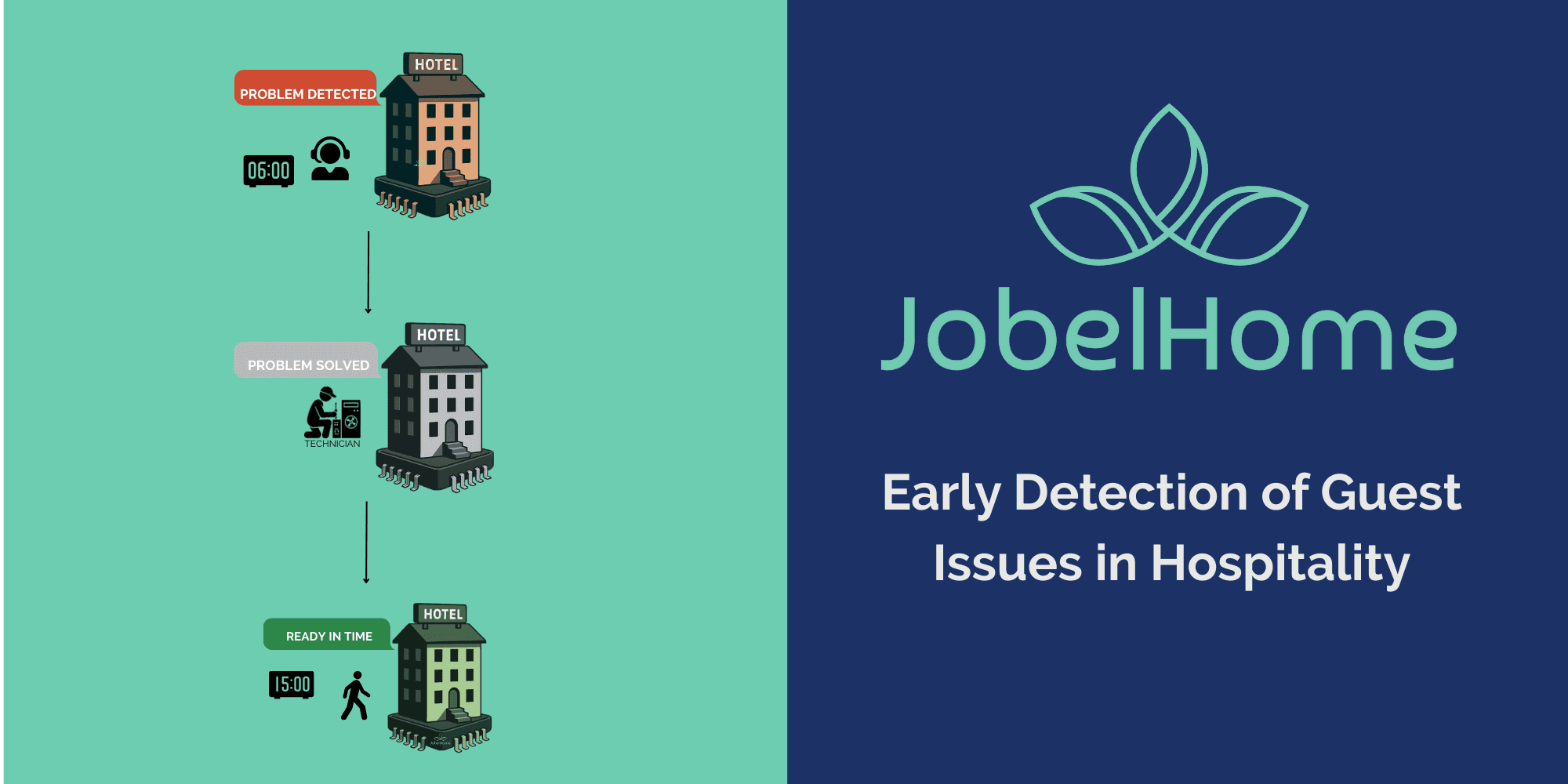
Early detection of guest issues means identifying signals before the guest feels forced to complain.
Instead of relying solely on guest messages, operators gain visibility through operational indicators such as:
System errors or device failures
Temperature deviations
Access issues
Unusual usage patterns
Missed confirmations or delayed actions
When these signals are detected early, intervention can happen calmly and proactively.
This approach shifts support from reactive to preventive.
How automated alerts support proactive hospitality
Automated support alerts act as an early warning system for guest experience risks.
Rather than waiting for complaints, operators are notified when something is likely to affect a stay. This allows teams to:
Fix issues before guests notice
Reach out proactively with context
Resolve problems without escalation
Maintain a calm tone in communication
This is especially effective in distributed or multi-property operations, where manual monitoring does not scale.
To see how early alerting works in practice, explore JobelHome’s support alerts system:
https://www.jobelhome.com/support-alerts
Preventing complaints instead of managing them
When early detection is in place, guest support changes fundamentally.
Instead of:
Apologising after frustration builds
Handling negative emotions
Responding under time pressure
Teams can:
Intervene early
Communicate clearly and calmly
Resolve issues before they become personal
This not only improves guest satisfaction but also reduces support workload over time.
It follows the same principle seen across other automated operational layers, where visibility prevents escalation:
https://www.jobelhome.com/blog/how-early-noise-alerts-prevent-police-and-neighbour-escalations
Scaling guest experience without scaling complaints
As portfolios grow, relying on guests to report problems becomes increasingly risky.
More stays mean:
More potential failure points
Less personal oversight
Higher variability in guest behaviour
Early detection systems scale naturally. Once configured, the same alert logic applies across all properties, without increasing staff dependency.
This allows operators to protect guest experience consistently, even as operations expand.
Conclusion: complaints are a late signal
Guest complaints are not the start of a problem. They are the final signal of one.
Early detection of guest issues gives operators the chance to act before frustration turns into dissatisfaction. By identifying operational signals early and responding proactively, hospitality teams protect reviews, reduce support stress, and deliver a smoother guest experience.
The best guest support happens before the guest ever needs to ask.
To understand how proactive alerting fits into modern hospitality operations, explore JobelHome’s support alerts system:
https://www.jobelhome.com/support-alerts
Who We Are
JobelHome is a hospitality automation platform helping hotels and holiday homes reduce operational effort, energy waste, and guest friction through smart, connected systems.
Website: https://www.jobelhome.com/
Instagram: https://www.instagram.com/jobelhomeplatform/
LinkedIn: https://www.linkedin.com/company/105750936/admin/dashboard/
Email: hello@jobelhome.com